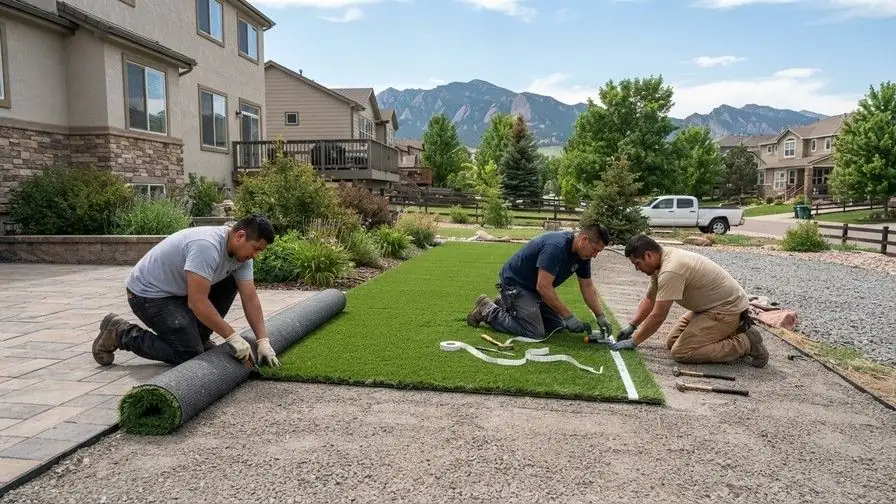
Dogs wear lawns down fast, so plenty of Westminster pet owners consider turf. A pet focused install resembles a standard one, with a few key differences. Here is what goes into it, step by step.
What makes pet turf different from regular turf?
Pet turf differs from regular turf in its focus on drainage and cleanup. Many pet installs use a fully permeable backing, a free draining crushed rock base and an odor resistant infill. Here is what else to plan: secure edges so dogs cannot pull up borders, and a hose close by for easy rinsing. Mapping where your dog actually runs and goes shows which areas need pet grade materials. Shade helps as well, keeping turf cooler for paws in summer.
Backing and Base
Step one is the backing and base. Pet turf often uses a backing that lets liquid pass across the entire surface instead of through small punched holes. Underneath, a clean crushed rock base carries urine and rinse water down and away.
On clay soil, the base may go deeper so liquid does not pool right under the surface.
Infill and Edges
Step two is infill and edges. Coated or antimicrobial infill is popular in pet areas since it rinses clean and resists odor. Edges get extra care too, because dogs that dig or tug at corners can lift loosely fastened turf, so borders are often secured more tightly or set against stone or concrete.
Some owners bury a barrier along fences where their dogs like to dig.
Step Three: Plan Around Your Dog
Pay attention to where your dog runs, rests and goes. Putting pet grade turf in those spots and standard turf elsewhere can help balance cost. A hose bib or rinse station nearby makes cleanup simple.
Shade helps too, since a shaded spot keeps turf cooler for paws in summer.
Turf Built Around Dogs
A pet focused install keeps turf clean and comfortable for years. When you are ready, the next step is an introduction to an independent local turf provider serving Westminster.