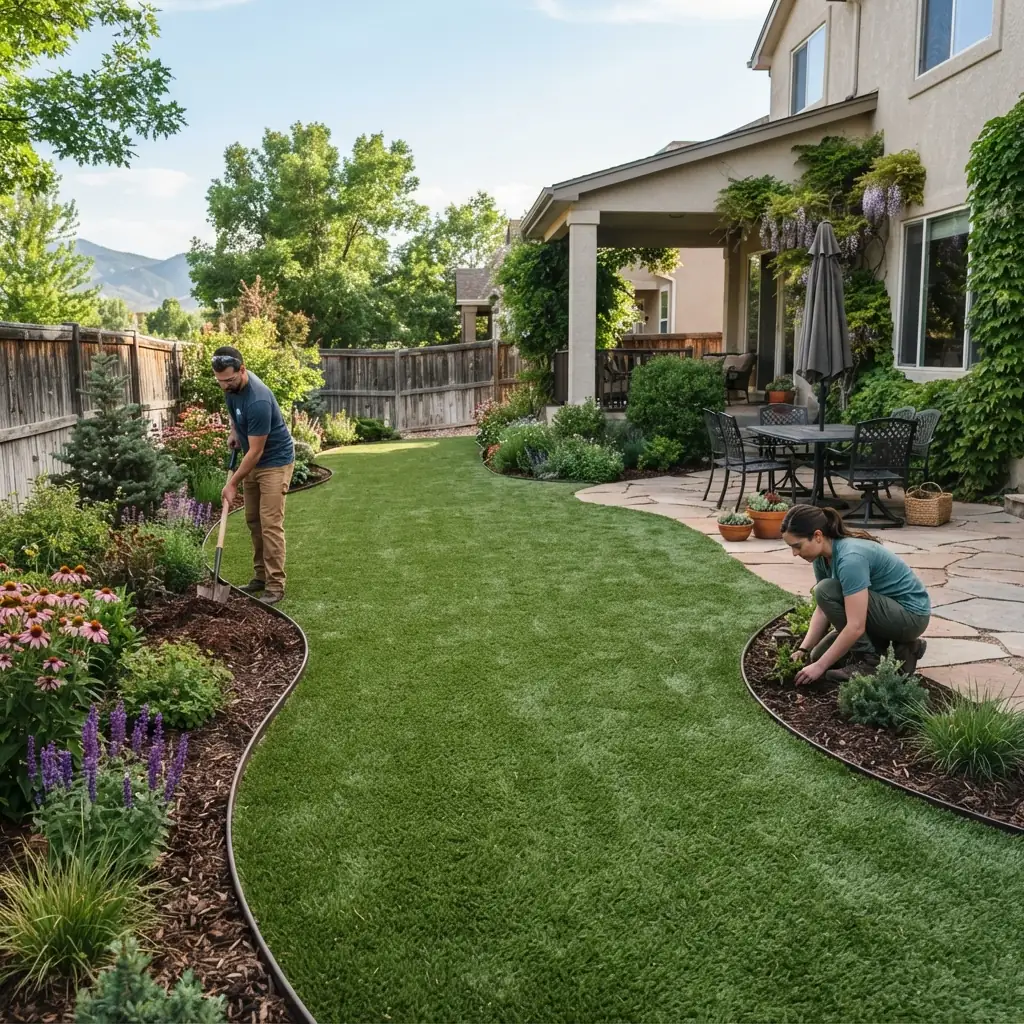
A turf yard looks its best when it is planned into the landscape instead of laid over it. In Westminster, that means thinking through sun and shade, how snow slides off the roof, where the dog runs and how turf meets beds, paths and patios. Here is how it works: we introduce homeowners to an independent local provider who designs artificial turf around how your yard really gets used.
Step One: Sketch the Yard First
Begin with a rough drawing. Mark the areas to cover, the beds and trees you are keeping and any spots where water collects. Note where downspouts empty and where snow piles up in winter, since those zones need extra drainage attention.
Front and back yards often suit different products. The front is mostly about looks, so a softer, more natural blend works well. The back may need tougher turf for play, pets and patio furniture. The provider can say whether one product or two fits best, and how to transition between them without an obvious seam.
Step Two: Plan the Edges at Beds, Walks and Trees
Edges decide whether a turf yard looks sharp or homemade. Along concrete walks and patios, the turf is usually tucked tight and fastened so no gap shows. Along planting beds, bender board or a similar border holds the edge and keeps mulch and rock off the turf.
Trees need space to breathe. Rather than running turf up to the trunk, many installs leave a ring of mulch or rock at the base so roots get air and water. Irrigation for nearby shrubs and trees stays on, rerouted around the turf where needed.
Step Three: Everyday Life With Turf
After install, a turf yard asks very little of you. A leaf blower or rake clears debris, a hose rinse handles dust and pollen and a stiff brush lifts matted spots on busy paths. Snow can be shoveled gently or left to melt, and a plastic shovel is easier on the blades than a metal one.
Look over the edges after the first winter and yearly after that, especially where turf meets beds. The busiest areas may need a light infill top up. With that bit of care, the yard holds its shape and color for many seasons.
Taking the First Step on Your Yard
A quick conversation plus a site visit usually tells you whether turf suits your home. Next, we introduce Westminster homeowners to an independent local provider who measures, brings samples and writes up a plan. Send a note about the areas you want covered and we will forward it.