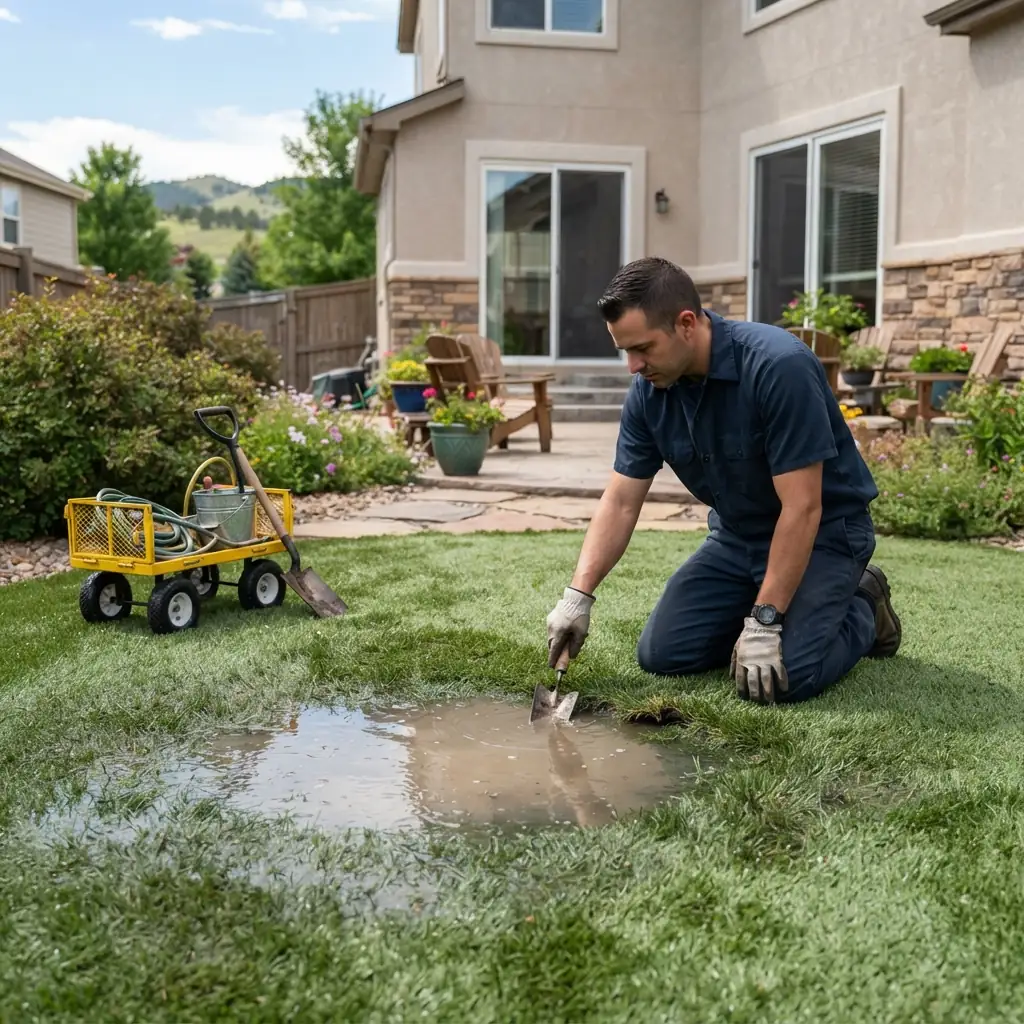
Properly installed turf should handle rain and snowmelt with no puddles. If water sits on top or a corner stays soggy for days, something beneath needs a look. Here is how it works: we introduce Westminster homeowners to an independent local turf provider who can pin down the cause and recommend a repair.
Why Water Collects on Turf
An unevenly compacted base can sink over time and leave dips that hold water. Turf over clay without enough crushed rock below may drain slowly. Edges set a bit higher than the lawn can trap water rather than letting it run off.
Water from elsewhere counts too. A downspout pointed at the turf, a sprinkler zone that never got capped or a neighboring yard sloping toward yours can deliver more than the base can take.
Step by Step: Finding the Problem
First, the provider usually watches where water goes during a hose test or after a storm. Next, they check the yard's grade, the edges and where downspouts and sprinkler heads are. Then lifting a piece of turf near the trouble spot shows whether the base has sunk or the backing is clogged.
With that information, they can say whether the fix is a spot base repair, regrading part of the yard or adding a drain like a gravel trench or a downspout extension.
What a Repair Usually Involves
Small dips are often fixed by folding the turf back, adding and compacting base rock, then reattaching the turf and brushing in infill. Bigger issues may need a section regraded to slope away from the house, or a perforated pipe or gravel channel added to move water out.
Drainage repairs rarely mean new turf. If the turf is still in good condition, it can usually be lifted, the base corrected and the same piece laid back down.
Starting a Drainage Check
Tell us where water gathers, how long it stays after rain and whether downspouts or sprinklers drain onto the turf. Then we pass the details to an independent local turf provider serving Westminster, who sets up a visit and quotes any repair.