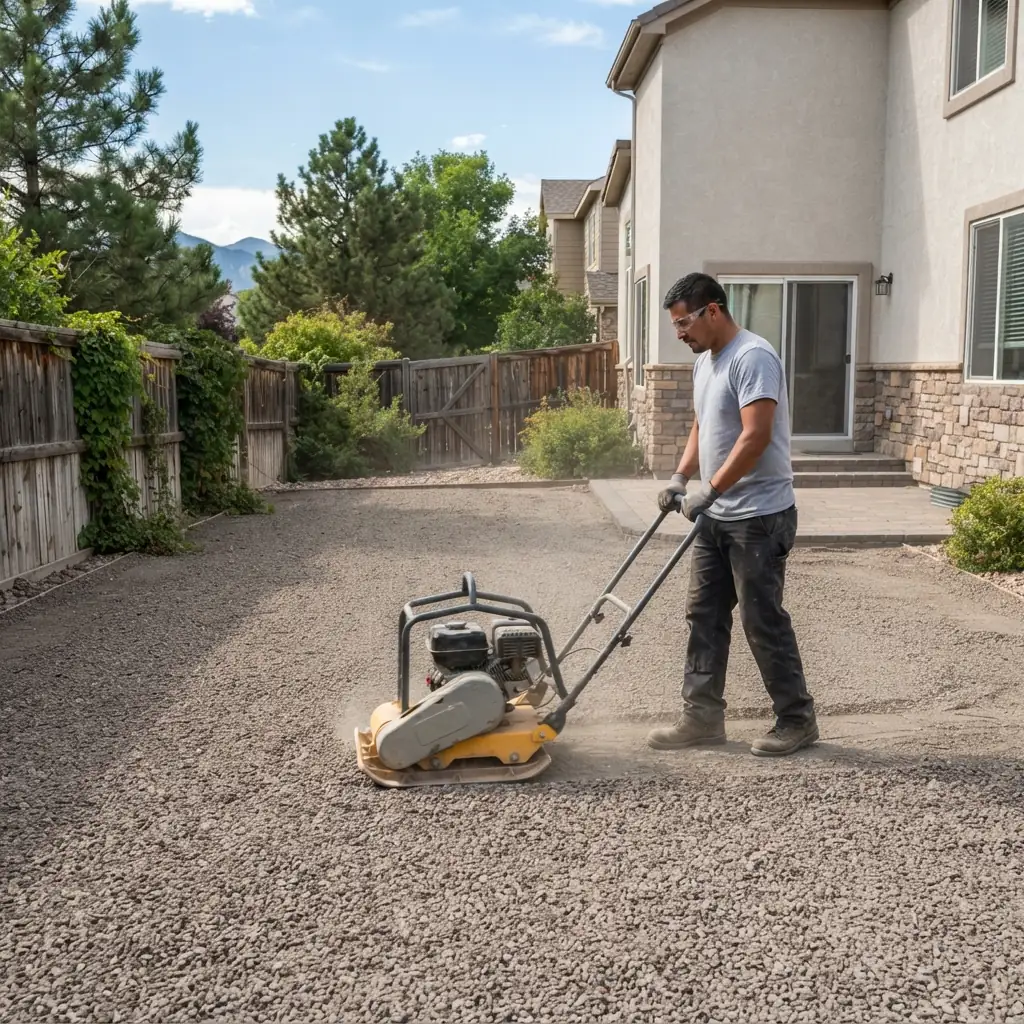
Much of what keeps a turf lawn looking good for years is done before the turf shows up. The base handles drainage, keeps the surface even and prevents settling. Here is how it works: we introduce Westminster homeowners to an independent local turf provider who takes care of excavation and base work within a turf project.
Excavation
Step one is pulling out the current lawn and enough soil to make room for the base. How deep depends on the soil, how the space will be used and how well it drains. The clay soils found along the Front Range often need a deeper dig than sandy ground.
Expect sod cutters, small excavators and wheelbarrows or skid steers. Removed soil and sod are hauled off unless you want them somewhere else on the property.
Step Two: Road Base and Compaction
With the ground opened up, a weed barrier fabric may be laid. Crushed rock or road base then goes down in layers, each one dampened and compacted with a plate compactor. The grade is checked layer by layer so water flows away from the house and off the lawn.
A thin finishing layer of finer material gives the turf a smooth bed. Small dips and ridges get fixed here, before they can show through.
Equipment and Access
Base work is the heaviest stage of the job. Rock is often dumped on the driveway or street and then moved into the yard. Tight gates, steps and soft lawn between the drop point and the work area all change how it gets moved.
Ask the provider how driveways and walks will be protected, where the rock will sit and how long it will stay.
Questions to Raise About Base Work
Share the size of the area, your soil type if you know it and how materials can get into the yard. Then we pass your request to an independent local turf provider serving Westminster, who visits and quotes the whole project, base work included.